 TCR Media December 2, 2025
Metallurgy is the foundation of modern engineering. Every bridge, aircraft, turbine, automobile, and power plant component relies on the strength, durability, and reliability of the materials used. The science that ensures these materials perform as intended is called metallurgical testing—a crucial process that determines the composition, structure, and behavior of metals and alloys under various conditions.
In today’s fast-paced industrial landscape, where safety, performance, and precision cannot be compromised, metallurgical testing has evolved beyond simple hardness or tensile checks. Modern technology allows laboratories to examine materials at the elemental level using simultaneous element detection, giving engineers and manufacturers deeper insight into their material’s composition and performance potential. This advanced analytical capability forms the backbone of quality assurance, helping industries identify, verify, and optimize materials long before they go into service.
At TCR Advanced Engineering Pvt. Ltd., we specialize in providing world-class metallurgical testing and material analysis services, combining scientific expertise, cutting-edge technology, and decades of experience. Our goal is to ensure that every material, component, and structure you use stands the test of time, quality, and performance.
Understanding Metallurgical Testing
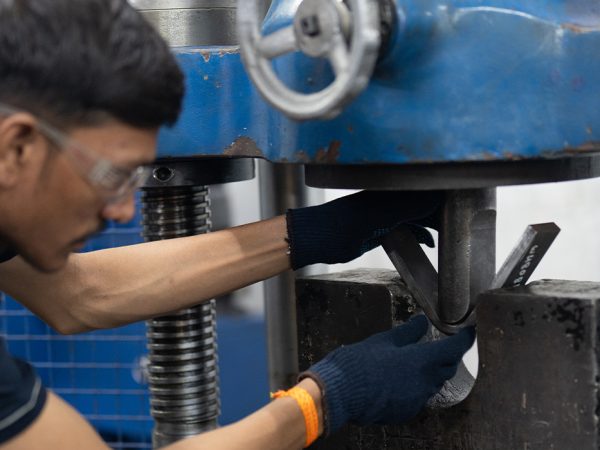
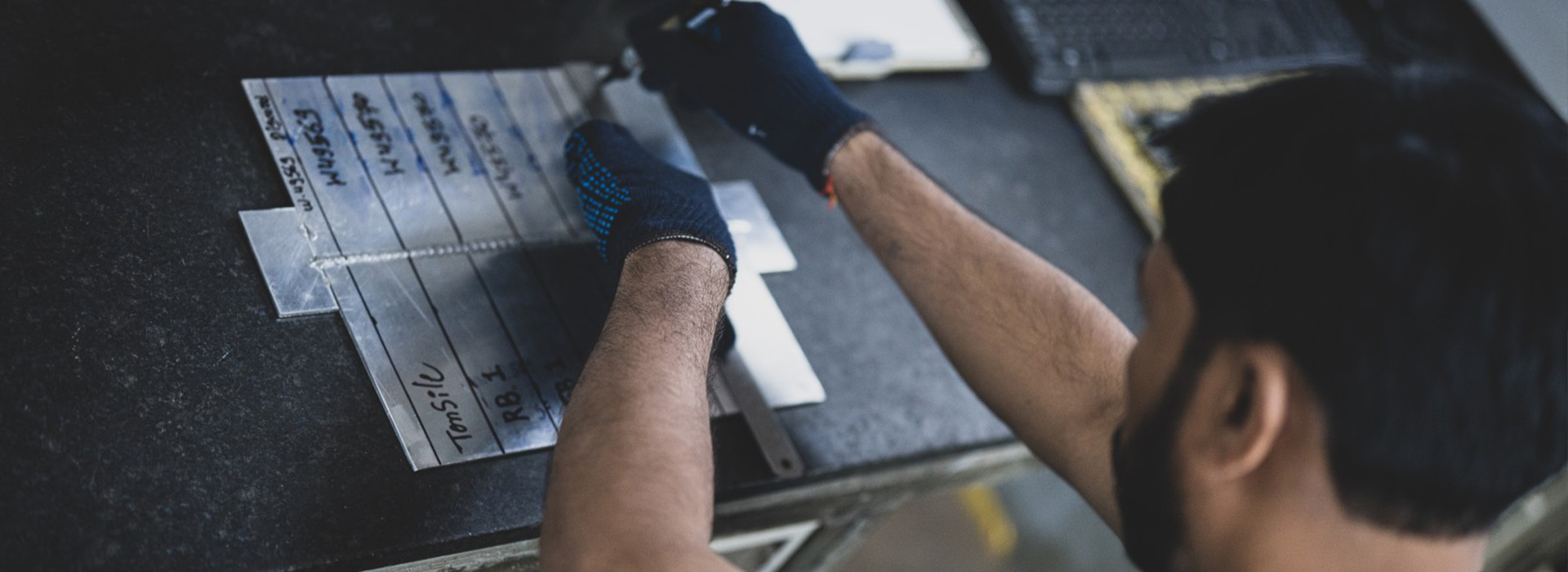
Metallurgical testing is the scientific process of evaluating and understanding the physical and chemical properties of metals and alloys. It helps determine how materials will behave under stress, heat, corrosion, and fatigue — and whether they meet required specifications or standards. The testing process covers a broad spectrum of techniques, including microstructural examination, hardness testing, tensile and impact tests, chemical composition analysis, and failure investigation.
At its core, metallurgical testing serves one primary purpose — to ensure that the material is fit for its intended application. Whether it’s a high-pressure boiler tube, a bridge component, an automotive crankshaft, or an aerospace turbine blade, every material has a specific composition and microstructure that dictates how it will perform. Any deviation, even at trace levels, can cause a significant impact on performance or lead to premature failure.
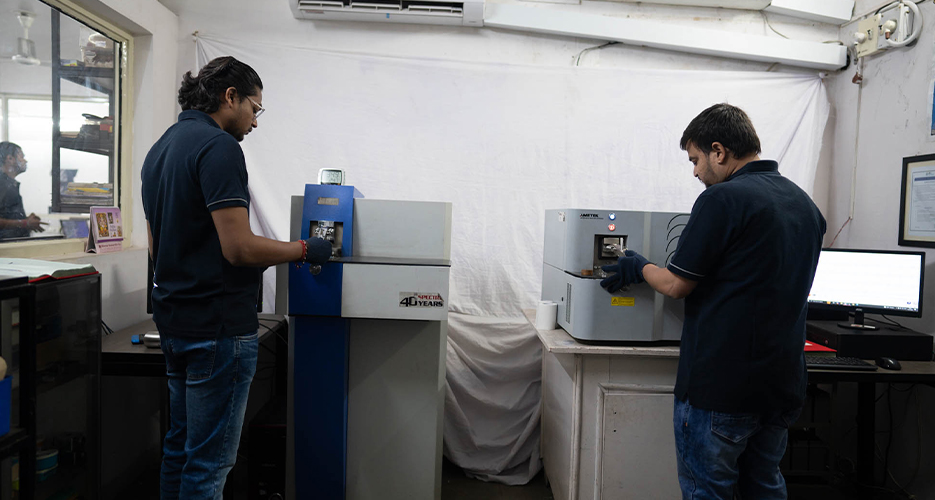
To identify and eliminate such risks, metallurgical testing combines microscopic analysis with advanced chemical testing methods. One of the most important advancements in this field is simultaneous element detection, which allows laboratories like TCR Advanced Engineering Pvt. Ltd. to identify multiple elements within a single test, saving time while improving accuracy and reliability.
Detailed Metallurgical Testing Processes and Applications
1. Microstructure Examination
Microstructure Examination is an important part of Metallurgical Testing, as it helps us understand the internal structure of a metal or alloy at a microscopic level. Every metal has a unique pattern made of grains, phases, and inclusions, and these tiny details decide how strong, durable, or reliable the material will be in real use. Through this test, we prepare a small sample, polish it carefully, and then observe it under a microscope to study grain size, surface condition, heat-treatment quality, and possible defects such as cracks or porosity.
Industries rely on Microstructure Examination to make sure their materials meet the required standards. In the automobile industry, it helps check engine parts, gears, shafts, and safety components. In the manufacturing and fabrication sector, it verifies weld joints, castings, and forged parts. The oil & gas and power generation industries use this Metallurgical Testing process to confirm the integrity of critical components exposed to high pressure and temperature. Even aerospace and defence depend on microstructure analysis to ensure maximum reliability.
Overall, Microstructure Examination plays a key role in ensuring product quality, safety, and long-term performance across various industries.
2. Microstructure Examination – Metallurgical Testing
Microstructure Examination is one of the most useful steps in Metallurgical Testing, as it helps us see what is happening inside a metal beyond the surface. Every metal or alloy has a unique internal structure made of grains, phases, and small inclusions. These microscopic features decide how the material will perform—whether it will be strong, flexible, wear-resistant, or sensitive to cracks. By polishing a sample and viewing it under a microscope, Microstructure Examination reveals important details such as heat-treatment quality, grain size, weld integrity, and early signs of defects.
Many industries depend on this Metallurgical Testing method to ensure that their metal components are reliable. The automotive industry checks engine parts, transmission components, and safety-critical items with this process. In steel manufacturing and fabrication, it helps assess welds, cast parts, and forging quality. The oil & gas sector uses microstructure analysis to evaluate pipes, pressure vessels, and high-temperature components. In power plants, it helps monitor turbine parts and boiler components that face constant stress. Even aerospace and defence rely on this examination to maintain strict material standards.
Overall, Microstructure Examination ensures that metals are safe, durable, and fit for demanding industrial applications.
3. Linear Measurement on Weld – Metallurgical Testing
Linear Measurement on Weld is an important part of Metallurgical Testing, as it helps evaluate the accuracy and quality of welded joints. In any welded component, the size, shape, and alignment of the weld must match the required standards. Through linear measurements, we check dimensions such as weld length, height, width, reinforcement, undercut, and overall alignment. These measurements help identify whether the weld has been done correctly or if there are structural issues that may reduce strength or safety.
Industries rely on this Metallurgical Testing process because welds are often used in critical load-bearing structures. In the fabrication and construction industry, linear measurement ensures that beams, columns, pipelines, and pressure vessels have accurate and safe welds. The oil & gas sector uses this test to verify pipeline welding, refinery structures, and storage tanks, where even small dimensional errors can create long-term risks. In the automotive and heavy machinery industry, it helps confirm weld quality on frames, chassis parts, and components exposed to constant vibration. The power and energy sector also depends on linear weld measurement for boilers, turbines, and structural supports.
Overall, Linear Measurement on Weld is a simple yet powerful Metallurgical Testing step that ensures welds meet specifications, maintain strength, and provide long-term reliability across various industries.
4. Grain Size Measurement – Metallurgical Testing
Grain Size Measurement is an essential part of Metallurgical Testing because the size of grains inside a metal directly affects its strength, toughness, and performance. Metals with smaller grains are usually stronger and more resistant to wear, while larger grains may make the material softer or more prone to cracking under stress. Through this testing process, a metal sample is polished, etched, and examined under a microscope to accurately measure the grain structure. This helps determine whether the metal has been properly heat-treated or if it needs further processing.
Many industries depend on Grain Size Measurement to maintain quality and safety. In the automobile industry, this Metallurgical Testing method ensures engine components, gears, and suspension parts have the right grain structure for durability. The steel and manufacturing industry uses grain size analysis to check castings, forgings, and welded parts for uniformity and strength. The oil & gas sector relies on this test to confirm that pipelines, valves, and pressure components can handle high pressure and harsh environments. Power plants also use grain size testing for turbine components, boiler tubes, and high-temperature parts to avoid premature failure.
Overall, Grain Size Measurement plays a key role in verifying that metals meet required standards and can perform reliably across various industrial applications.
5. Inclusion Rating – Metallurgical Testing
Inclusion Rating is an important part of Metallurgical Testing that helps identify and measure non-metallic particles present inside metals. These tiny particles—such as oxides, sulfides, or silicates—are often formed during the melting or manufacturing process. Even though they are very small, inclusions can affect a metal’s performance by reducing its strength, toughness, or fatigue life. Through Inclusion Rating, a metal sample is polished and examined under a microscope to check the type, size, and quantity of inclusions. This helps determine whether the metal meets the required purity and quality standards.
Many industries depend on Inclusion Rating because hidden inclusions can cause unexpected failures. In the automotive industry, this Metallurgical Testing method ensures reliable engine parts, gears, and safety components. The steel manufacturing sector uses inclusion analysis to improve the quality of billets, blooms, and rolled products. In the oil & gas industry, inclusion rating helps evaluate pipes, valves, and pressure components that work under high stress. Aerospace and defence industries have very strict standards, so inclusion testing is essential to ensure materials can withstand extreme conditions without failure. Even tool and die manufacturing uses this test to confirm the purity of tool steels.
Overall, Inclusion Rating is a key Metallurgical Testing process that ensures metal purity, strength, and long-term reliability across critical industries.
6. Jominy End Quench Test – Metallurgical Testing
The Jominy End Quench Test is a widely used method in Metallurgical Testing to determine the hardenability of steel. Hardenability tells us how deeply a metal can harden when it undergoes heat treatment. In this test, a heated steel sample is quenched only at one end using a controlled water stream. As the cooling effect travels along the length of the sample, different hardness levels develop. By measuring hardness at different points, we can understand how well the steel responds to heat treatment and how deep the hardness can penetrate.
This Metallurgical Testing process is extremely valuable across many industries. In the automobile sector, it helps ensure that gears, shafts, axles, and engine components achieve the required hardness for long life and wear resistance. The tool and die industry uses this test to select the right steel grade for cutting tools, molds, and dies that face heavy stress. In manufacturing and forging industries, Jominy testing guides heat-treatment procedures for steel bars, rods, and mechanical components. The oil & gas industry also relies on hardenability data to use steel that can handle high pressure and harsh environments in pipelines and drilling tools.
Overall, the Jominy End Quench Test is an essential Metallurgical Testing technique that helps industries choose the right steel grade and heat-treatment method for safe, strong, and long-lasting performance.
7. Case Depth Measurement – Metallurgical Testing
Case Depth Measurement is an essential part of Metallurgical Testing, especially for components that go through case-hardening processes like carburizing, nitriding, or induction hardening. Case hardening creates a hard outer surface (case) while keeping the core tough and flexible. Case Depth Measurement helps determine how deep this hardened layer has formed. This is important because if the case layer is too shallow, the part may wear out quickly, and if it is too deep, the component may become too brittle. Through microscopic examination, hardness testing, or chemical analysis, we accurately measure the depth of the hardened zone to ensure it meets the required specifications.
Many industries depend on this Metallurgical Testing technique because case-hardened components play a critical role in performance. The automotive industry uses case depth analysis for gears, camshafts, crankshafts, and transmission parts that must resist heavy wear and friction. The machine and tool industry relies on it for bearings, sprockets, and cutting tools that require a durable outer layer. In the oil & gas sector, case depth testing is important for downhole tools, drilling equipment, and valves exposed to extreme conditions. Aerospace and defence industries also use this method to ensure safety and reliability of high-precision components.
Overall, Case Depth Measurement ensures that heat-treated parts achieve the right balance of strength, durability, and performance across various industrial applications.
8. Nitriding / Coating Layer – Metallurgical Testing
Nitriding or coating layer evaluation is an important part of Metallurgical Testing, especially for components that need high surface hardness, wear resistance, and long life. Nitriding is a heat-treatment process where nitrogen is diffused into the surface of steel to create a hard, protective layer. Similarly, coating processes like PVD, CVD, or plasma coating add a thin, strong layer to improve the material’s performance. Through Metallurgical Testing, we measure coating thickness, hardness, adhesion quality, microstructure of the layer, and overall uniformity. This helps confirm whether the treated or coated surface meets the required engineering standards.
Industries heavily rely on this testing process because coated or nitrided surfaces play a major role in performance and durability. The automotive industry uses nitriding/coating layer testing for gears, crankshafts, camshafts, pistons, and wear-resistant components. In the tool and die industry, this Metallurgical Testing method ensures cutting tools, punches, molds, and dies have strong surface layers for long service life. The oil & gas sector tests coated valves, drilling tools, and pipelines to check resistance to corrosion and friction. Aerospace companies use nitrided and coated components in engines and landing systems where reliability is critical. Even manufacturing and machinery industries depend on coating layer analysis to maintain consistency in bearings, shafts, and precision parts.
Overall, Nitriding/Coating Layer testing ensures the surface treatment is effective, durable, and capable of performing well in demanding industrial environments.
9. Measurement – Metallurgical Testing
Measurement is one of the most basic yet essential steps in Metallurgical Testing, as it helps ensure that metal components meet the exact dimensions, tolerances, and specifications required for safe and efficient performance. Even a small variation in size, thickness, or alignment can affect how a component functions in real applications. Metallurgical Testing includes various measurement techniques such as dimensional measurement, thickness measurement, weld measurement, layer measurement, and hardness mapping. These methods help verify whether the material or component has been manufactured correctly and is suitable for further use.
Industries rely heavily on accurate measurement because every product must fit and function perfectly. In the automotive industry, measurements are used to check engine components, gears, shafts, and structural parts to maintain precision and safety. The fabrication and construction industry uses measurement in Metallurgical Testing to confirm weld sizes, pipe dimensions, and structural alignment. In the oil & gas sector, accurate measurement ensures pipeline thickness, valve dimensions, and pressure-bearing components meet high-safety standards. The manufacturing and machinery industry uses measurement to maintain consistency in castings, forgings, and machined parts. Even aerospace and defence depend on precise measurements to ensure every part matches strict engineering requirements.
Overall, Measurement helps maintain quality, reliability, and performance across industries, making it a crucial part of Metallurgical Testing.
10. Color Metallography – Metallurgical Testing
Color Metallography is a specialized part of Metallurgical Testing that helps reveal detailed features of a metal’s microstructure using color-etching techniques. Unlike traditional black-and-white microscopy, color metallography brings out different phases, grain boundaries, and surface conditions in bright, contrasting colors. This makes it easier to identify variations in the material, detect defects, and evaluate heat-treatment quality. The process involves preparing a polished metal sample and applying a chemical etchant that reacts with the surface to produce distinct colors. This enhanced visibility allows engineers to study microstructural properties with greater clarity and accuracy.
Many industries benefit from Color Metallography because it provides deeper insights into material behavior. In the automotive industry, this Metallurgical Testing method is used to analyze gears, shafts, and hardened components to check case depth, heat-treatment uniformity, and structural quality. The tool and die industry uses color metallography to inspect tool steels and coated tools where fine microstructures are critical. In the oil & gas sector, this testing helps evaluate corrosion resistance, coating layers, and material degradation in pipelines and valves. Aerospace and defence industries use it for high-precision components to ensure reliability under extreme conditions. Even manufacturing and research laboratories rely on color metallography for material development and failure analysis.
Overall, Color Metallography enhances material understanding, supports quality control, and strengthens decision-making across various industries through clearer and more detailed Metallurgical Testing results.
11. Sigma Phase Measurement – Metallurgical Testing
Sigma Phase Measurement is an important part of Metallurgical Testing, especially for stainless steels and high-temperature alloys. The sigma phase is a brittle, unwanted phase that forms when certain metals are exposed to high temperatures for long periods. Even though it forms in small amounts, it can drastically reduce corrosion resistance, toughness, and overall mechanical strength. Sigma Phase Measurement helps identify how much sigma phase has developed, where it is located, and how it affects the material’s integrity. The process usually involves microscopic examination, image analysis, and sometimes hardness testing to determine the severity of sigma phase formation.
Many industries rely on this Metallurgical Testing method because sigma phase can cause sudden and unexpected failures. In the petrochemical and oil & gas industries, components like heat-exchanger tubes, refinery parts, and weld joints are often exposed to high temperatures, making sigma phase detection crucial. The power and energy sector uses this testing to assess boiler tubes, turbine components, and superheater materials, where long-term heat exposure can lead to phase transformation. In the stainless-steel manufacturing industry, sigma phase analysis helps maintain proper heat-treatment cycles and material quality. Even aerospace and marine industries depend on this testing to ensure alloys maintain strength and corrosion resistance during service.
Overall, Sigma Phase Measurement is a vital Metallurgical Testing process that helps industries detect harmful phase formation early, ensuring safer, stronger, and more reliable metal components.
12. Retained Austenite – Metallurgical Testing
Retained Austenite analysis is an important part of Metallurgical Testing, especially for steels that go through heat treatment processes like quenching and tempering. Austenite is a high-temperature phase in steel, and ideally, most of it should convert into martensite after heat treatment to achieve the needed hardness and strength. However, sometimes a portion of austenite remains untransformed—this is called retained austenite. If it stays in excess, it can cause dimensional changes, reduce hardness, weaken fatigue strength, and affect overall performance of a component. Metallurgical Testing helps measure how much retained austenite is present using microscopic examination, X-ray diffraction, or advanced image analysis.
Industries rely on this testing because retained austenite directly affects the stability and reliability of heat-treated parts. In the automotive sector, this test is used for gears, shafts, bearings, and transmission components to ensure they achieve the required hardness and do not deform during service. The tool and die industry uses retained austenite evaluation for cutting tools, molds, and high-strength tool steels where dimensional accuracy is critical. The manufacturing and forging industry checks retained austenite to fine-tune heat-treatment cycles for heavy-duty mechanical components. In the oil & gas sector, this Metallurgical Testing process helps confirm that high-pressure parts, valves, and drilling tools can withstand extreme performance conditions.
Overall, Retained Austenite testing ensures better heat-treatment control, improved material stability, and long-term reliability across multiple industrial applications.
13. Micro Hardness – Metallurgical Testing
Micro Hardness testing is an important part of Metallurgical Testing because it helps measure the hardness of very small areas on a metal surface. Unlike regular hardness tests, micro hardness focuses on tiny regions-such as thin layers, coatings, heat-treated zones, weld areas, and microstructures. Using methods like Vickers or Knoop indentation, a very small force is applied with a diamond indenter, creating a tiny impression. By studying this impression under a microscope, we can understand the hardness, strength, and uniformity of different layers within the metal.
Industries depend heavily on this Metallurgical Testing process for quality control and performance evaluation. In the automotive industry, micro hardness testing is used to check case-hardened parts like gears, camshafts, and bearings to ensure they have the correct hardness profile. The tool and die industry relies on it to test the hardness of cutting tools, molds, and coated surfaces where precision hardness is essential. In the oil & gas sector, micro hardness helps evaluate welds, heat-affected zones, and corrosion-resistant coatings on pipelines and valves. The aerospace and defence industries use this testing to assess turbine components, landing gear parts, and high-strength alloys that must perform reliably under extreme conditions. Even manufacturing and R&D labs use micro hardness to study new materials and heat-treatment effects.
Overall, Micro Hardness testing plays a key role in Metallurgical Testing by providing accurate insights into small-scale material behavior, helping industries ensure long-lasting performance and safety.
Simultaneous Element Detection for Material Analysis
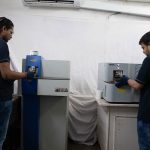
Traditional chemical analysis methods often test one or a few elements at a time, which can be time-consuming and may miss subtle impurities or variations in complex alloys. However, modern instrumentation such as Inductively Coupled Plasma Optical Emission Spectroscopy (ICP-OES) or Inductively Coupled Plasma Mass Spectrometry (ICP-MS) allows scientists to detect and quantify multiple elements simultaneously, even at trace levels.
Simultaneous element detection gives a complete “chemical fingerprint” of a material sample, identifying everything from major alloying elements like iron, nickel, chromium, or molybdenum, to trace contaminants such as sulfur, phosphorus, or lead. This capability is especially critical when analyzing high-performance materials used in industries where even minor compositional deviations can affect performance, safety, or durability.
At TCR Advanced Engineering Pvt. Ltd., we integrate this advanced analysis into our metallurgical testing services. Using Best equipment and globally recognized testing methods, we ensure each element in your material is measured with the highest level of precision. This analysis not only confirms whether your material meets international standards but also provides a deep understanding of how it will behave in real-world conditions.
The Importance of Metallurgical Testing in Industry
Metallurgical testing plays an indispensable role in ensuring material reliability across sectors. Every industry that depends on metals — from manufacturing to energy — relies on metallurgical testing to maintain quality, safety, and performance. The insights gained from these tests help engineers improve design, prevent failures, and ensure regulatory compliance.
Let’s explore how different industries depend on metallurgical testing and how TCR Advanced Engineering Pvt. Ltd. serves their unique requirements.
Oil & Gas and Petrochemical Industry
The oil and gas sector operates in some of the harshest environments imaginable — high pressure, high temperature, and exposure to corrosive media such as hydrogen sulfide and seawater. Pipelines, valves, refinery components, and offshore structures must be made from materials that can withstand these extreme conditions.
Metallurgical testing ensures that these materials meet strict international standards and resist cracking, corrosion, and fatigue. For example, a small impurity or deviation in the elemental composition of a steel pipeline can lead to hydrogen-induced cracking or sulfide stress corrosion, potentially causing catastrophic leaks.
At TCR Advanced Engineering Pvt. Ltd., our metallurgical testing services help oil and gas companies verify raw material quality, validate weld integrity, and perform root-cause failure investigations. By using simultaneous element detection, we can identify even minute traces of elements that could compromise corrosion resistance or mechanical performance, ensuring your materials remain safe and reliable throughout their lifecycle.
Automotive and Transportation Industry
In the automotive world, materials are constantly subjected to vibration, wear, and temperature fluctuations. Whether it’s the engine block, suspension system, or transmission gear, each component must deliver consistent performance under stress. The strength, hardness, and fatigue resistance of these components directly depend on their metallurgical structure and chemical composition.
Metallurgical testing helps automotive manufacturers ensure that every part produced meets exact material specifications. Through simultaneous element detection, engineers can verify alloy composition in seconds, identify impurities, and prevent costly recalls caused by material failure.
TCR Advanced Engineering Pvt. Ltd. works closely with automotive manufacturers and component suppliers to provide comprehensive metallurgical and material testing. Our services cover everything from raw material validation to failure analysis, ensuring that each metal part contributes to safe, efficient, and high-performance vehicles.
Aerospace and Defense Industry
The aerospace and defense sector demands materials that can withstand extreme conditions—high stress, temperature variations, and exposure to aggressive environments. Even a slight deviation in material composition can lead to catastrophic consequences. Every alloy used in this industry must meet precise chemical and structural specifications.
Metallurgical testing is the backbone of aerospace quality assurance. Advanced techniques such as simultaneous element detection are essential for verifying that materials meet the strict standards required by defense and aerospace agencies. These tests ensure the correct alloying elements are present in the right proportions, that no trace impurities exist, and that each component can endure its intended operational environment.
At TCR Advanced Engineering Pvt. Ltd., we understand the sensitivity of this sector. We provide precise and confidential metallurgical testing solutions, from alloy verification and fatigue failure studies to in-depth microstructure analysis. Our results help aerospace manufacturers ensure compliance, reduce risk, and maintain absolute confidence in their materials.
Power Generation and Energy Sector
Power generation facilities—whether thermal, nuclear, or renewable—depend on metals that operate under constant heat and stress. Turbine blades, boilers, condensers, and pressure vessels are exposed to high temperatures and cyclic stresses, making metallurgical integrity critical.
Over time, materials in these environments can degrade due to creep, oxidation, or corrosion. Metallurgical testing allows engineers to monitor this degradation, assess remaining life, and schedule maintenance before failure occurs. Simultaneous element detection plays an important role in detecting changes in alloy composition or contamination from prolonged service exposure.
At TCR Advanced Engineering Pvt. Ltd., we assist power plants in assessing both new and in-service materials. Our experts conduct detailed chemical and microstructural analysis, helping clients extend component life, improve efficiency, and prevent unscheduled downtime.
Heavy Manufacturing, Fabrication, and Mining
In heavy industry and mining, machinery and components face continuous mechanical stress, abrasion, and exposure to harsh conditions. Castings, forgings, and welded assemblies must exhibit not just strength but consistency. Metallurgical testing ensures that base materials and weld joints are uniform, defect-free, and chemically balanced.
Through simultaneous element detection, we can quickly identify whether materials meet desired compositions, whether contamination has occurred, and whether specific treatments or process adjustments are necessary.
TCR Advanced Engineering Pvt. Ltd. partners with manufacturing and mining firms to deliver complete metallurgical testing—from raw material inspection to failure analysis. Our experts help detect process deviations early, preventing costly downtime and ensuring every product leaves the production line with full quality assurance.
Infrastructure, Construction, and Engineering
Bridges, tunnels, skyscrapers, and industrial plants depend heavily on the strength and stability of metals used in construction. Materials like structural steel, reinforcement bars, and fasteners must meet stringent standards of durability and safety.
Metallurgical testing plays an important role in verifying the chemical and mechanical integrity of these materials before they are used in large-scale projects. Detecting impurities or deviations in elemental composition helps avoid structural defects, premature corrosion, and costly repairs.
At TCR Advanced Engineering Pvt. Ltd., our metallurgical testing and simultaneous element detection capabilities give construction companies and project engineers the assurance that their materials meet required standards and safety benchmarks. From weld inspections to full compositional analysis, we ensure that every structure built is safe, durable, and compliant.
How TCR Advanced Engineering Pvt. Ltd. Leads in Metallurgical Testing
For more than two decades, TCR Advanced Engineering Pvt. Ltd. has been a trusted partner for industries seeking accurate and reliable material testing solutions. Our laboratory is equipped with advanced instruments and operated by skilled metallurgists, chemists, and engineers who combine technical excellence with a deep understanding of real-world industrial needs.
Our approach to metallurgical testing is holistic. We don’t just provide results; we provide insight. From chemical composition and mechanical properties to microstructure and failure modes, we study every aspect of a material to determine not only what happened but why it happened and how to prevent it in the future.
Our metallurgical laboratory is fully equipped to perform advanced tests like simultaneous element detection, microscopic analysis, hardness testing, and corrosion evaluation. We follow globally recognized standards such as ASTM, ISO, and DIN, ensuring that every result is accurate, traceable, and credible across international markets.
Whether you are developing new materials, troubleshooting a failure, or verifying compliance, TCR Advanced Engineering Pvt. Ltd. provides the expertise and precision your project deserves.
Frequently Asked Questions (FAQs)
What is metallurgical testing, and why is it important?
Metallurgical testing is the scientific evaluation of metals and alloys to determine their composition, structure, and mechanical behavior. It is essential for verifying that materials meet performance and safety standards before they are used in manufacturing or construction.
What is simultaneous element detection, and how is it used in metallurgical testing?
Simultaneous element detection is an advanced analytical method that allows laboratories to detect and measure multiple elements in a single test. It provides a complete chemical profile of a material, identifying both major and trace elements accurately.
Why should I choose TCR Advanced Engineering Pvt. Ltd. for metallurgical testing?
TCR Advanced Engineering Pvt. Ltd. combines decades of industry experience, state-of-the-art technology, and expert professionals to deliver comprehensive testing solutions. Our integrated approach ensures accurate results, faster turnaround, and detailed interpretation tailored to your industry.
Which industries can benefit from metallurgical testing?
Virtually every industry that uses metal components can benefit — including oil & gas, power generation, automotive, aerospace, manufacturing, and infrastructure.
How does metallurgical testing help prevent failure?
By revealing flaws, impurities, or structural inconsistencies in metals before they are used, metallurgical testing helps engineers correct issues early. This proactive approach prevents costly failures, increases safety, and ensures compliance.
Does TCR Advanced Engineering provide failure investigation?
Yes. Our metallurgical team specializes in root-cause failure analysis. We combine mechanical testing, microstructural examination, and chemical analysis to identify the exact cause of failure and recommend preventive actions.
Can metallurgical testing help improve product quality?
Absolutely. Regular testing helps manufacturers maintain quality control, verify supplier materials, and enhance overall production consistency.
Conclusion
Metallurgical testing is more than just a laboratory service—it is a critical process that safeguards industries, enhances product reliability, and supports innovation. As materials evolve and industrial standards become more demanding, the importance of detailed, accurate, and simultaneous element detection has never been greater.
At TCR Advanced Engineering Pvt. Ltd., we take pride in being at the forefront of metallurgical testing and material analysis. Our mission is to help clients across industries ensure their materials are not just compliant, but capable of delivering long-term performance and safety. Through our expertise, technology, and dedication, we transform testing into trust — giving you the confidence to build, innovate, and succeed.