 TCR Media February 18, 2026
Tensile Testing is an essential procedure in materials science and engineering that helps us understand how materials behave under forces that try to pull them apart. It is one of the most common and most informative tests used in laboratories and industries worldwide to assess mechanical properties and ensure that products meet required standards. At its core, a tensile test examines how a material reacts when force is applied in tension, right up to the point where it deforms permanently or breaks completely.
In today’s competitive and quality-driven manufacturing environment, understanding tensile behavior isn’t optional — it’s imperative. Whether it involves testing metals used in heavy construction, analyzing polymers used in packaging, or verifying components in aerospace assemblies, Tensile Testing plays a key role in product safety, performance, and reliability.
What is Tensile Testing?
Tensile Testing is a standardized mechanical test in which a specifically prepared sample, often called a specimen, is placed in a testing machine and subjected to a steadily increasing pulling force until it either elongates beyond yield or ultimately fails. During this process, important mechanical properties such as strength, ductility, and elasticity are recorded and analyzed. The results are used to create stress–strain curves that provide critical insight into how a material responds to tension. Additionally, this form of testing is considered destructive in most cases because the material ultimately undergoes plastic deformation and breaks during the test.
The tensile test is widely documented and standardized in international norms such as ISO 6892 1 for metals, which ensures that mechanical properties are measured consistently across laboratories and industries.
Tensile Testing of Metals and Alloys – Why It Matters
Metals and alloys form the backbone of modern structural and mechanical applications — from automotive gears and aircraft frames to medical implants and heavy engineering components. Understanding their tensile properties enables engineers to predict how these materials will perform under real world conditions.
When conducting Tensile Testing of Metals and Alloys, the specimen is usually machined to a standardized shape. This ensures that when tension is applied, the stress distribution and deformation results are consistent and reliable for comparison. This testing method reveals critical data such as yield strength (the stress at which a material begins to deform plastically), ultimate tensile strength (the maximum stress the material can withstand), and elongation at break (how much the material stretches before breaking).
Overall, tensile testing of metals and alloys is indispensable in quality assurance, material selection, design verification, and failure analysis. Industries rely on this data to ensure that structural components will withstand loads without unexpected deformation or failure.
Understanding Tensile Test With Electronic Extensometer
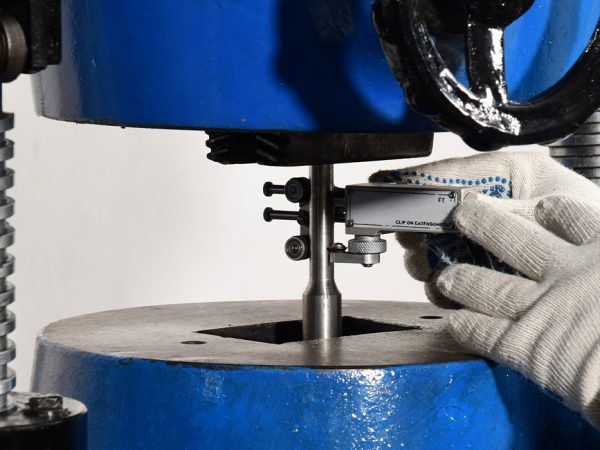
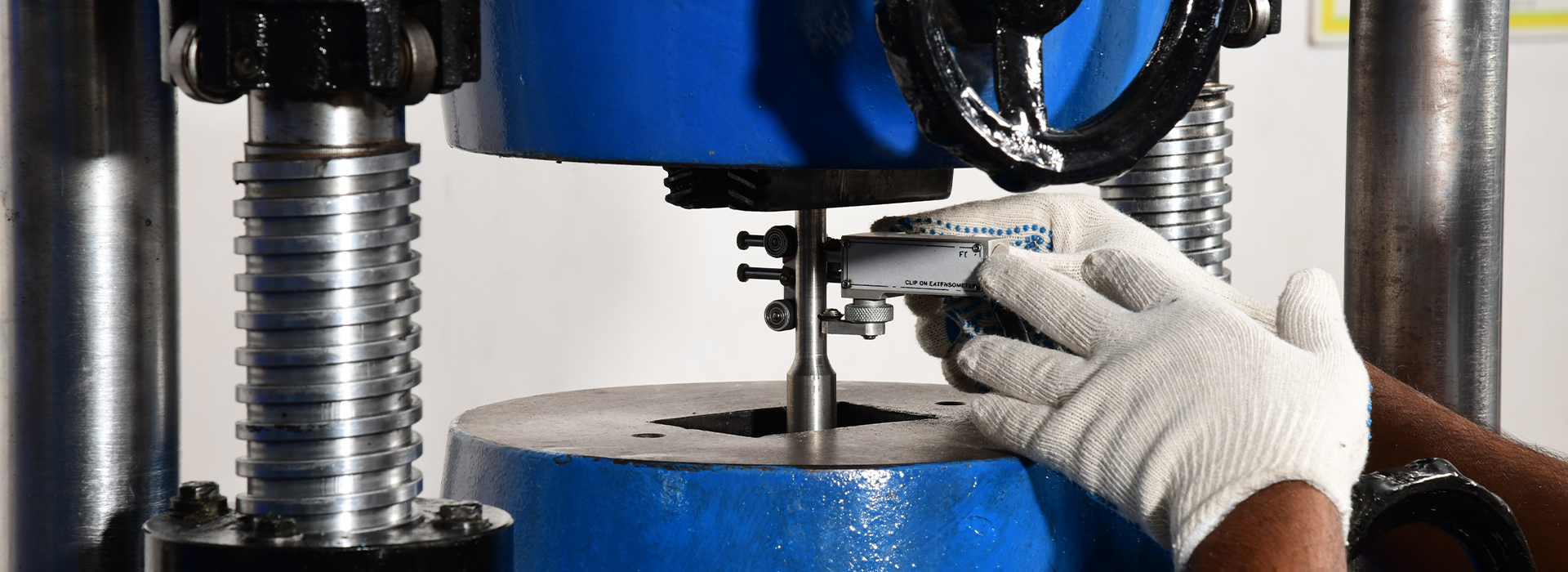
An Electronic Extensometer is a precision measuring device often used during tensile tests to accurately record the amount of elongation or strain experienced by the material. It attaches directly to the specimen and measures small changes in length with high precision, allowing analysts to calculate key parameters such as Young’s modulus, yield strength, and ultimate tensile strength.
Using an Electronic Extensometer enhances the accuracy of a tensile test because it isolates the measurement of deformation from the movement of the testing machine itself. In many conventional tests, only the crosshead movement (the distance between grips in the testing machine) was used to calculate elongation, but this includes movement from the machine frame and elastic deformation of the grips. With an extensometer attached directly to the test sample, these influences are minimized, leading to more reliable and precise results.
Electronic extensometers are indispensable for high precision testing and are often required in tests following stringent standards such as ASTM E8 or ISO 6892 1.
Tensile Testing Using Texture Analyser – A Versatile Technique
While traditional tensile tests use universal testing machines, Tensile Testing Using Texture Analyser instruments extends testing capabilities to soft and flexible materials, liquids, gels, biological samples, and packaging materials. Texture Analysers are designed to perform tensile tests and other mechanical tests like compression, bending, and peel strength.
In a Texture Analyser, the specimen is gripped and stretched until deformation or failure occurs. The instrument measures the force applied and the distance the sample stretches, producing rich data that show how materials behave when subjected to tensile stress. In materials like films, elastomers, and flexible plastics, this approach helps determine properties such as stretchability, tensile strength, and elasticity.
A Texture Analyser is particularly useful in industries like food and pharmaceutical production, where tensile properties of packaging, edible materials, or soft polymers must meet performance and safety requirements.
Tensile and Mechanical Testing Services NABL Lab – The Gold Standard in Quality Assurance
When material testing results have major implications for safety, product certification, regulatory compliance, or international supply chains, conducting tests in a NABL Accredited Laboratory adds unparalleled credibility. NABL (National Accreditation Board for Testing and Calibration Laboratories) accreditation means the laboratory follows internationally recognized standards for technical competence, quality management, and data integrity.
At a Tensile and Mechanical Testing Services NABL Lab, materials are tested under rigorous protocols to deliver highly reliable data. These accredited laboratories use cutting edge equipment such as universal testing machines, electronic extensometers, and texture analysers to perform tensile tests. The results from such facilities are widely accepted by regulatory bodies, industrial customers, and quality assurance managers across sectors.
For customers seeking compliance with standards such as ISO, ASTM, IS, BS, and EN, performing tensile and mechanical testing in a NABL lab ensures that the data are traceable, repeatable, and accepted globally.
Tensile Testing Services NABL Accredited Laboratory – Why Choose It
Choosing a NABL Accredited Laboratory for tensile testing services means selecting quality, consistency, and trust. Accredited labs follow strict quality protocols, periodic audits, and compliance checks to ensure that test results are accurate and documented according to best practices.
These labs provide comprehensive test reports that include detailed stress–strain curves, tabulated mechanical properties, traceable calibration certificates, and expert interpretations of results. For research and development teams, sourcing materials for high performance applications, or quality control departments in manufacturing, such reports are indispensable.
With Tensile Testing Services from a NABL Accredited Laboratory, businesses reduce risk, enhance product safety, improve design decisions, and comply with international quality standards.
Why Choose – TCR Advanced Engineering Pvt. Ltd.
TCR Advanced Engineering Pvt. Ltd. is a leading engineering firm specializing in advanced material testing and quality assurance services. With decades of experience in mechanical testing, we are dedicated to providing accurate, reliable, and expert tensile testing solutions for a wide range of materials including metals, alloys, polymers, composites, and industrial components.
At TCR Advanced Engineering, we understand that material behavior under stress is a cornerstone of safe and high quality product design. To support this, we have built state of the art laboratories equipped with modern universal testing machines, electronic extensometers, texture analysers, and software for advanced data analysis. Our testing services adhere to national and international testing standards, and the integrity of our test data is trusted by designers, manufacturers, and quality managers across industries.
We offer comprehensive Tensile Testing Services, including Tensile Testing of Metals and Alloys, Non Metal Tensile Testing, Tensile Test With Electronic Extensometer, and Tensile Testing Using Texture Analyser. In addition, our collaboration with accredited laboratories, including NABL labs, ensures that your material test results meet strict global compliance requirements and stand up to scrutiny in certification and regulatory environments.
At TCR Advanced Engineering, we insist on technical excellence, rapid turnaround, and transparent reporting — all tailored to support our clients’ goals in quality, performance, and safety.
Conclusion
Tensile Testing remains one of the most important mechanical tests used in material science and engineering. It provides invaluable insights into how materials respond to stress and strain, including properties like tensile strength, elasticity, yield behavior, and elongation. Whether testing metals and alloys or evaluating softer materials using texture analysers, tensile tests help engineers and manufacturers make informed decisions about material selection, design validation, and quality control.
Utilizing advanced tools like electronic extensometers further enhances the accuracy of tensile tests, while conducting tests in NABL Accredited Laboratories ensures global acceptance and compliance. Firms like TCR Advanced Engineering Pvt. Ltd. play a pivotal role in delivering critical testing services that support innovation, safety, and performance in countless industrial applications.
Investing in reliable tensile testing services ultimately means better products, safer usage, and trusted performance — elements that are crucial for success in modern engineering and manufacturing.
Frequently Asked Questions (FAQs)
What is the purpose of Tensile Testing?
Tensile Testing is conducted to evaluate how materials behave under pulling forces so that their mechanical properties — such as strength, ductility, and elasticity — can be understood and used for design, quality control, and regulatory compliance.
What does Tensile Testing of Metals and Alloys measure?
When metals and alloys are tensile tested, the test measures yield strength, ultimate tensile strength, elongation, and other properties that indicate how the material will perform under stress.
Why use an Electronic Extensometer in a tensile test?
An Electronic Extensometer provides precise measurements of material deformation, leading to more accurate calculation of strain and mechanical properties compared to relying solely on machine crosshead movement.
Can tensile tests be performed on soft materials?
Yes, tensile tests can be conducted on soft materials using a Texture Analyser or other adapted testing systems that measure how these materials stretch and break.
Why choose a NABL Accredited Laboratory for tensile testing services?
NABL Accredited Laboratories follow strict quality and calibration standards, ensuring that test results are globally recognized, accurate, and suitable for compliance, certification, and regulatory needs.