 TCR Media December 9, 2025
In the evolving world of manufacturing and quality assurance, the term Material Testing holds critical importance. Among the many facets of material testing, Metallurgical Testing stands out as a vital set of techniques that allow engineers, inspectors and quality teams to deeply understand the nature, behavior and reliability of metallic materials. At TCR Advanced Engineering PVT. LTD we are proud to serve as a dedicated Material Testing Provider, offering advanced metallurgical testing and material testing services to industry—supporting performance, safety and compliance.
Understanding Material Testing and Metallurgical Testing
Material testing refers broadly to the range of methods used to assess the properties, composition, structure and performance of a material. Within this domain, metallurgical testing is the specialised subset that focuses on metals and alloys, their microstructure, mechanical behaviour, chemical composition, corrosion resistance, and the various treatments and processing they undergo. With metallurgical testing, we seek to answer: does the metal or alloy meet specification, will it perform as intended, has the processing produced the desired microstructure, and will it remain robust under service conditions?
At TCR Advanced Engineering, our role as a material testing provider means we deliver a full suite of metallurgical testing methods—ranging from Tensile Testing to Hardness Testing, from Chemical Testing to Corrosion Testing, and including Metallography Services and Nondestructive Testing (NDT) where required. These methods combine to give a comprehensive picture of material quality, performance and life-expectancy.
Let’s Understand in Detail About Metallurgical Testing
Metallurgical Testing is an important part of Material Testing, helping industries evaluate the internal structure, quality, and performance of metals. Even if a material appears perfect from the outside, its microscopic features can reveal hidden issues. Metallurgical Testing ensures that metals are safe, durable, and suitable for real-world applications.
Microstructure Examination
Microstructure Examination focuses on studying the fine internal structure of metals under a microscope. This reveals grains, phases, heat-affected zones, and tiny imperfections that cannot be seen with the naked eye. It helps verify if the heat treatment process was done correctly, whether the material is free from undesirable phases, and how it will react under stress or temperature changes. Engineers depend heavily on this examination to confirm overall material integrity.
Macrostructure Examination
Macrostructure Examination helps identify large-scale features on the surface or near-surface of a metal sample. After polishing and etching the sample, defects such as cracks, porosity, weld overlap, and segregation become visible. This method provides a quick general assessment of the material’s quality and is extremely useful for evaluating castings, forgings, and welded components.
Linear Measurement on Weld
Welded components must meet strict dimensional accuracy. Linear Measurement on weld ensures that the weld’s length, width, and alignment are within acceptable limits. Even minor deviations can compromise joint strength. This examination helps maintain welding quality standards and prevents premature failures in structures or mechanical parts.
Grain Size Measurement
The size of grains in a metal significantly affects its strength, ductility, and toughness. Grain Size Measurement helps determine whether the material has the correct grain refinement based on the heat treatment carried out. A well-controlled grain size results in better mechanical properties and enhances the performance of components used in demanding applications.
Inclusion Rating
Metals, especially steel, may contain non-metallic particles known as inclusions. Inclusion Rating evaluates the number, size, and distribution of these inclusions. Excessive inclusions reduce fatigue strength and overall durability. Understanding the inclusion content helps ensure that the material is clean and suitable for high-performance applications.
Jominy End Quench Test
The Jominy End Quench Test is performed to determine the hardenability of steel. In this test, a heated steel specimen is quenched at one end while hardness is measured along its length. This reveals how deeply the steel can harden during heat treatment. The results help engineers select the correct steel grade and heat-treatment process for components such as gears, shafts, and mechanical parts.
Case Depth Measurement
Case depth is an important factor for components that undergo case hardening. Case Depth Measurement determines how deep the hardened layer extends from the surface into the core material. This ensures that the component has the necessary wear resistance, toughness, and durability required for long-term use.
Nitriding / Coating Layer Measurement
Many components receive protective coatings or nitrided layers to improve hardness and corrosion resistance. Nitriding or coating layer measurement helps verify the thickness and uniformity of these layers. A correct layer depth ensures that the component performs reliably under stress, friction, and corrosive conditions.
Color Metallography
Color Metallography uses special etching techniques to highlight different phases in metal in various colors. This makes it easier to identify microstructural variations, heat-treatment changes, and phase distributions. It is especially useful in analyzing stainless steels, duplex steels, and complex alloy systems.
Sigma Phase Measurement
Sigma phase is an unwanted brittle phase that forms in some stainless steels. Sigma Phase Measurement helps determine whether this harmful phase has developed in the material. Detecting it early is important because the sigma phase can significantly reduce corrosion resistance and toughness, making components unsafe for critical applications.
Retained Austenite
Retained Austenite analysis determines how much austenite remains in a material after heat treatment. Excess retained austenite can cause dimensional instability, cracking, or unpredictable behavior during service. Measuring the retained austenite percentage ensures that the component remains stable and reliable.
Micro Hardness
Micro Hardness testing measures hardness on extremely small areas of a material. It is widely used near welds, coatings, case-hardened layers, and thin sections where regular hardness tests cannot be performed. This detailed hardness mapping helps verify consistency, treatment quality, and overall structural performance.
Tensile Testing
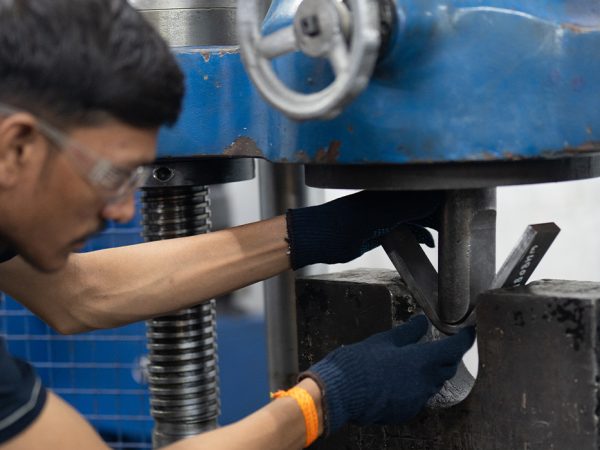
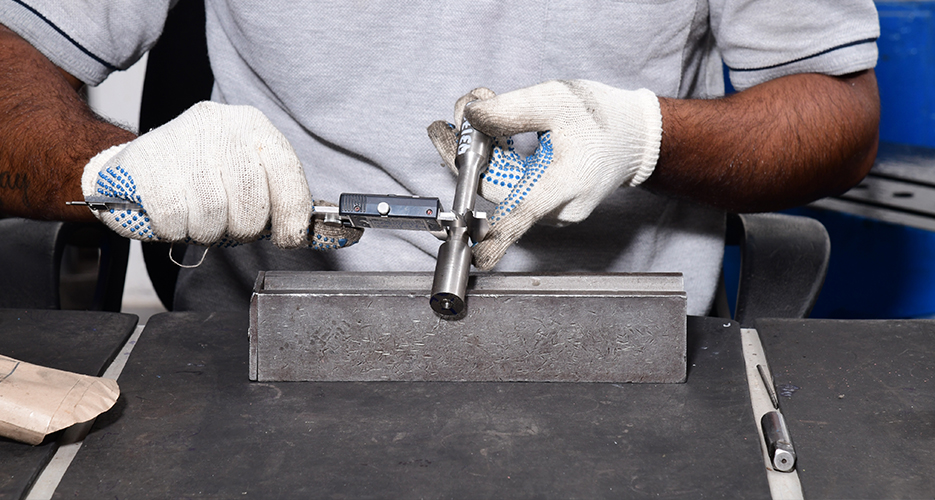
One of the foundational mechanical examinations in material testing is Tensile Testing. This method involves applying a uniaxial load to a specimen of material until failure, while monitoring parameters such as yield strength, ultimate tensile strength, elongation and reduction of area. These measures are crucial indicators of how a metal or alloy will behave in real-world structural or load-bearing applications. In metallurgical testing, tensile results often reveal whether the heat treatment and processing have created the correct microstructure and mechanical properties for the intended service.
By performing tensile testing, TCR Advanced Engineering helps clients verify conformance to specifications, detect sub-standard material or processing flaws, and support failure investigations by examining how and when the material broke.
Chemical Testing
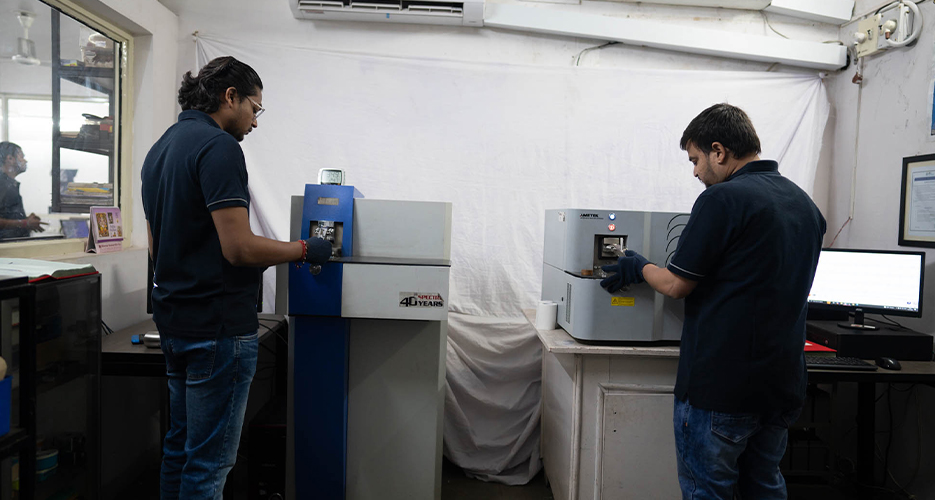
Chemical testing is another pillar of metallurgical and material testing. It involves determining the elemental composition and sometimes the trace impurities in a metal or alloy. Knowledge of chemical composition is critical because the alloying elements, impurities and distribution of elements strongly influence the material’s behaviour—its strength, corrosion resistance, heat-treatability and fatigue life. Modern metallurgical testing laboratories use techniques such as optical emission spectroscopy, glow discharge, inductively coupled plasma analysis, and more, to identify and quantify elements.
At TCR Advanced Engineering, our chemical testing services allow clients to verify that the supplied material matches the specification, to assess whether heat treatments or coatings have altered surface chemistry, and to support root-cause investigations when a component fails prematurely.
Mechanical Testing
Mechanical testing is a broader category under which tensile testing falls, but also includes tests for hardness, impact toughness, bend testing, fatigue and other deformation and failure modes. In the context of material testing, mechanical testing gives insight into how the material will respond when loaded, deformed or stressed under service conditions. Metallurgical testing uses mechanical testing results in combination with microstructure information to assess whether processing and alloying have produced the desired properties. For example, a coarse grain size may manifest as reduced toughness or lower fatigue strength.
At TCR Advanced Engineering, our mechanical testing protocols ensure that clients receive reliable data on strength, ductility, toughness and fatigue—key attributes required for structural, aerospace, oil & gas, automotive and heavy engineering applications.
Hardness Testing
Closely linked to mechanical testing is Hardness Testing. Hardness testing is an efficient method to gauge a material’s resistance to penetration, indentation or scratching. In metallurgical testing, hardness results often serve as a proxy for strength, microstructure condition (e.g., case-hardened layers), heat-treatment effectiveness and more. There are a variety of hardness methods (Brinell, Rockwell, Vickers, Knoop), and in metallography services laboratories one might apply microhardness testing to thin sections, coatings or heat-affected zones.
With our material testing services at TCR Advanced Engineering, hardness testing allows rapid screening of material condition, verification of case depths or surface treatments, and correlation with mechanical behaviour for a holistic assessment of metallic parts.
Corrosion Testing
In many industries, the service environment is aggressive: exposure to salt water, chemicals, elevated temperatures, cyclic loading, or in situ reactions like hydrogen embrittlement or chloride attack. Corrosion Testing within material testing and metallurgical testing is therefore essential. It evaluates how susceptible a metal or alloy is to attack, how long it may last in service, and whether coatings or treatments are effective. For example, tests for pitting, intergranular corrosion, hydrogen induced cracking, or salt-spray exposure are commonly used to assess corrosion resistance.
TCR Advanced Engineering includes corrosion testing in its material testing portfolio because identifying corrosion susceptibility early helps prevent catastrophic failures, extend component life and ensure safety and reliability in sectors such as oil & gas, marine, petrochemical, power generation and infrastructure.
Metallography Services
One of the most revealing parts of metallurgical testing is Metallography Services—the microscopic and often macroscopic examination of the metal’s internal structure, grains, phases, inclusions, imperfections, weld zones, coatings and surface treatments. Metallography provides the “why” behind many mechanical test results and failures. For instance, a high tensile strength but low ductility result may be due to coarse grains, improper phase balance, or defects in the microstructure that are revealed by metallography analysis. Typical metallography services include preparation of specimens (cutting, mounting, grinding, polishing, etching), optical microscopy, scanning electron microscopy (SEM), photomicrography, grain-size measurement, inclusion rating, case depth measurement and more.
At TCR Advanced Engineering we provide metallography services as an integral part of our material testing offering—our skilled metallurgists and technicians prepare and examine specimens, interpret microstructures, produce detailed reports and help clients understand the link between processing, structure and performance.
Nondestructive Testing (NDT)
While many material testing methods require destruction of the sample (cutting, breaking, polishing) to reveal internal conditions, Nondestructive Testing (NDT) offers the ability to inspect materials, components or structures without impairing their usefulness. NDT is often used in conjunction with metallurgical testing to detect surface or subsurface defects, thickness variations, cracks, corrosion under insulation, weld integrity and more. Examples include ultrasonic testing, magnetic particle testing, liquid penetrant testing, eddy current testing, radiography and more.
At TCR Advanced Engineering we include NDT techniques within our material testing services, because in many real-world applications you cannot afford to destroy a component to inspect it. NDT allows for inspection of in-service parts, critical structures, welds and high-value components, thereby supporting preventive maintenance, life-extension programmes, and quality assurance in industries such as aerospace, power generation, petrochemical, oil & gas and infrastructure.
Integrating the Methods for Full-Spectrum Material Testing
In practical material testing implementation, the methods described above are often used in combination as part of a metallurgical testing workflow. For example: a structural steel component might first undergo chemical testing to verify alloy composition, then hardness testing to check for heat-treatment condition, tensile testing to assess strength and ductility, metallography services to evaluate grain structure and inclusions, and NDT to inspect welds or in-service integrity. For corrosion-exposed components, corrosion testing would be added or integrated before service initiation or during life-cycle monitoring. This integrated approach ensures that all facets of material quality—composition, microstructure, mechanical performance, durability and service integrity—are addressed.
At TCR Advanced Engineering, our role as a material testing provider means we coordinate these methods for our clients: we design the test programme, prepare specimens, run the tests under controlled standards (ASTM, ISO, EN) and deliver comprehensive reports and insights. Our clients rely on us not simply for raw test data, but for meaningful interpretation—what does the result mean for their component, for their service life, for their risk profile, and what remedial actions may be needed.
Specific Industries and Their Material Testing Needs
Several industries in India and globally have critical demands for metallurgical testing methods of material testing. A few key sectors and how material testing and metallurgical testing methods apply are described below.
Oil & Gas and Petrochemical
In the oil & gas industry, pipelines, subsea equipment, well casings, pressure vessels and structural supports must withstand harsh corrosion environments, high pressure, cyclic loading and welded joints. Material testing in this sector demands chemical testing to verify alloy composition (for corrosion-resistant steels and superalloys), hardness testing and metallography services to verify heat-treated layers or coatings, tensile testing to satisfy strength requirements, corrosion testing to simulate salt-water or sulphide attack, and NDT to inspect weld integrity and detect cracks or corrosion under insulation. Metallurgical testing is critical because failure can lead to environmental disaster and huge economic loss.
Power Generation (Thermal, Nuclear, Renewable)
Power plants utilise high-temperature, high-pressure components—boiler tubes, turbine rotor shafts, generator casings, heat exchangers. Material testing and metallurgical testing here serve to ensure mechanical testing meets design loads, corrosion testing addresses oxidation or steam environments, metallography services check for creep microstructural changes, and NDT monitors in-service components for fatigue cracks or wall thinning. Chemical testing verifies alloy integrity especially in nuclear or super-alloy applications. The role of a material testing provider like TCR Advanced Engineering is essential to ensure safe, long-life operation of power assets.
Automotive and Heavy Engineering
In automotive frames, chassis components, engine parts, gear trains and heavy-duty machinery, materials face fatigue, cyclic loading, wear, thermal stress and manufacturing defects. Material testing methods such as tensile testing (for strength/ductility), hardness testing (for wear resistance), metallography services (for microstructure and heat-treatment verification), chemical testing (for alloy verification) and NDT (for welds or castings) are key to quality assurance. Metallurgical testing enables manufacturers to deliver reliable components and to diagnose failure modes in service or during prototypes.
Aerospace and Defence
Here, the demands are extremely high—superalloys, titanium alloys, composite-metal systems. Material testing and metallurgical testing must address mechanical testing (tensile, fatigue, creep), chemical testing (trace elements, residuals), hardness testing (surface treatments, coatings), metallography services (grain size, inclusion content, fatigue cracks), corrosion testing (salt spray, hydrogen environment), and NDT for structural integrity (ultrasonics, radiography). A material testing provider must comply with rigorous standards and provide high confidence results. Metallurgical testing is indispensable in this high-risk, high-performance domain.
Construction, Infrastructure and Oilfield Equipment
Bridges, buildings, offshore platforms, pipelines require materials that can withstand extreme environments, long service life, welding, corrosion, fatigue. Material testing across these sectors includes chemical testing (to verify material grade), hardness testing (for wear and abrasion resistance), tensile testing (for load-bearing capacity), metallography services (to assess weld zones, microstructural defects), corrosion testing (for marine or chemical exposure) and NDT (weld inspections, in-service monitoring). The role of metallurgical testing in infrastructure is to ensure safety, durability and compliance.
Mining, Metallurgical Plants and Materials Suppliers
Material testing and metallurgical testing are also critical in the raw materials sector—where steel suppliers, casting houses, forgings, metal-fabricators must prove quality of the input material before delivery. Chemical testing verifies supplied grade, metallography services inspect grain structure and defects, mechanical testing (tensile, hardness) confirm mechanical properties, and NDT catch hidden defects. As a material testing provider, TCR Advanced Engineering supports suppliers and fabricators to certify their output and to provide documentation to downstream users.
The Value of a Material Testing Provider
Engaging a specialist material testing provider such as TCR Advanced Engineering saves time, enhances reliability, ensures compliance with standards and offers deeper interpretive insight. Rather than merely supplying raw data, we integrate mechanical testing (like tensile and hardness), chemical testing, metallography services, corrosion testing and NDT into coherent test programmes tailored to the client’s needs. Our clients benefit from confidence in material performance, reduced risk of failure, extended service life of components, and improved quality control. When the words “material testing” and “metallurgical testing” are used, they represent much more than simple tests—they represent assurance, quality and safety.
Why Metallurgical Testing Matters
Metallurgical testing underpins the reliability and safety of metallic components and structures. Without it, materials may be used out of specification, processing errors may go undetected, defects may lead to failure, corrosion may progress unseen and welds may harbour hidden cracks. Metallurgical testing provides the detective work that reveals internal structure, hidden flaws and process deviations. By integrating methods like tensile testing, hardness testing, chemical testing, corrosion testing, metallography services and nondestructive testing (NDT), the client gets a holistic view of material condition and performance.
In the modern manufacturing and service world, where demands for quality, safety, durability and traceability are ever higher, metallurgical testing is indispensable. As a material testing provider, TCR Advanced Engineering PVT. LTD stands ready to deliver advanced metallurgical testing services, helping industries across oil & gas, power, automotive, aerospace, infrastructure, supplier networks and more to meet their material-testing needs.
Concluding Thoughts
In conclusion, when we refer to material testing, particularly metallurgical testing, we emphasise not just the execution of isolated tests but the orchestration of a full spectrum of methods—from tensile testing and hardness testing, to chemical testing, metallography services, corrosion testing and nondestructive testing (NDT). At TCR Advanced Engineering PVT. LTD, we take pride in offering these comprehensive material testing services, supporting diverse industries and their unique requirements. Whether your need is for verifying a new batch of steel, assessing a critical welded joint, diagnosing corrosion damage, or ensuring material compliance in an aerospace component, our metallurgical testing expertise is ready to serve. Trust in material testing, invest in metallurgical testing, and partner with TCR Advanced Engineering for confidence in your materials’ performance and safety.
FAQs
1. What is Metallurgical Testing?
Metallurgical Testing is the process of analyzing metals’ structure, properties, and composition to ensure strength, durability, and compliance with industrial standards.
2. How is Metallurgical Testing different from Material Testing?
Material Testing covers all materials, while Metallurgical Testing specifically focuses on metals and alloys to study their structure, mechanical behavior, and corrosion resistance.
3. Why is Metallurgical Testing important in industries?
It ensures metals meet design specifications, prevent failures, improve safety, and extend the life of components in critical industrial applications.
4. What is the main purpose of Material Testing?
Material Testing determines a material’s mechanical, physical, and chemical properties to confirm performance, durability, and suitability for specific industrial applications.
5. What is Tensile Testing used for?
Tensile Testing measures a metal’s strength, ductility, and elasticity under tension to determine its ability to withstand applied forces.
6. What does Chemical Testing reveal?
Chemical Testing identifies the elemental composition and impurities in metals, ensuring materials meet specific alloy and purity standards.
7. Why is Mechanical Testing essential in Metallurgical Analysis?
Mechanical Testing evaluates strength, toughness, hardness, and fatigue resistance, helping engineers ensure materials perform safely under real-world stress conditions.
8. What is Hardness Testing in Metallurgical Testing?
Hardness Testing measures a metal’s resistance to deformation or penetration, indicating its strength, wear resistance, and heat-treatment quality.
9. How does Corrosion Testing help industries?
Corrosion Testing determines how materials behave in harsh environments, helping prevent premature failure and improve corrosion-resistant designs.
10. What are Metallography Services?
Metallography Services involve microscopic examination of a metal’s internal structure to assess grain size, inclusions, and heat-treatment effectiveness.
11. What is Nondestructive Testing (NDT)?
NDT inspects materials for hidden flaws or cracks without damaging the component, ensuring structural integrity and in-service reliability.
12. Which industries commonly use Metallurgical Testing?
Industries like oil & gas, power generation, aerospace, automotive, construction, and defense depend heavily on metallurgical testing for quality assurance.
13. How does Metallurgical Testing improve product quality?
By identifying material defects, improper heat treatments, or contamination early, metallurgical testing enhances performance and prevents future failures.
14. Can Metallurgical Testing detect internal defects?
Yes, through methods like NDT and metallography, internal cracks, porosity, inclusions, and other defects can be accurately detected.
15. How does TCR Advanced Engineering PVT. LTD help clients?
TCR Advanced Engineering provides complete metallurgical and material testing services, ensuring precise analysis, reliability, and certification for every industry.
16. What standards are followed during Metallurgical Testing?
TCR Advanced Engineering adheres to global standards like ASTM, ISO, and EN to maintain testing accuracy and reliability.
17. How is Metallography related to Mechanical Testing?
Metallography explains the microstructure responsible for mechanical properties like strength and toughness, linking structure to performance outcomes.
18. What equipment is used for Metallurgical Testing?
Equipment includes tensile testers, hardness testers, spectrometers, microscopes, corrosion chambers, and ultrasonic or radiographic NDT machines.
19. Can Metallurgical Testing prevent material failure?
Yes, early testing identifies weaknesses and defects, allowing corrective measures before the material or component is put into service.
20. Why choose TCR Advanced Engineering for Material Testing?
TCR Advanced Engineering PVT. LTD combines advanced equipment, expert metallurgists, and decades of experience to deliver trusted, comprehensive testing solutions.