TCR Media November 21, 2025
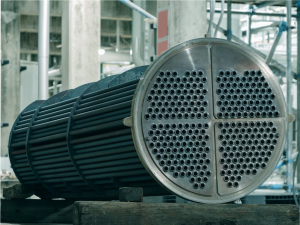
Heat exchangers are among the most critical assets in any industrial facility. Whether in a refinery, power plant, chemical process unit, or food manufacturing line, they ensure efficient heat transfer and process stability. However, these systems often operate under severe thermal, mechanical, and corrosive conditions — making them prone to damage and performance loss.
To ensure continuous operation, Failure and Root Cause Analysis plays a vital role. When a heat exchanger or boiler tube failure occurs, identifying the exact cause is crucial — not only to fix the immediate issue but also to prevent recurrence. A comprehensive failure analysis and failure investigation process reveals the “why” behind the breakdown, helping engineers improve design, operation, and maintenance strategies.
Understanding the Need for Failure and Root Cause Analysis
Industrial equipment rarely fails without warning. Yet, when failures occur, they can lead to significant downtime, energy loss, and safety hazards. Failure and Root Cause Analysis is a structured approach that goes beyond the visible damage to understand the underlying mechanisms responsible.
For heat exchanger inspection specialists, this process bridges the gap between inspection data and corrective action. It involves:
- Identifying the failure mode (e.g., corrosion, erosion, cracking).
- Investigating contributing factors (material, design, process conditions).
- Recommending actionable preventive measures.
In complex systems like boilers and heat exchangers, such analysis becomes indispensable to avoid repeat failures and ensure equipment longevity.
Common Failure Mechanisms in Heat Exchangers
Heat exchangers experience diverse degradation modes depending on the operating medium, material selection, temperature, and environment. The most common failure mechanisms identified during failure investigations include:
a) Corrosion and Erosion
Corrosion remains the leading cause of failure in heat exchanger tubes and plates. Localized attack, such as pitting, crevice corrosion, and galvanic corrosion, often initiates at the inner or outer tube surfaces. Erosion, typically caused by high-velocity fluids or solid particles, accelerates wall thinning and leakage.
b) Thermal Fatigue
Frequent temperature fluctuations cause cyclic expansion and contraction in metal tubes. Over time, this leads to the formation of thermal fatigue cracks, particularly in areas with stress concentration such as weld joints or tube-to-tube sheet connections.
c) Stress Corrosion Cracking (SCC)
SCC is a combined effect of tensile stress and a corrosive environment. It often affects stainless steels and copper alloys used in exchanger construction. Detecting SCC requires advanced metallurgical and heat exchanger inspection techniques.
d) Fouling and Scaling
Deposits of salts, oxides, or organic materials reduce thermal efficiency and create hotspots that accelerate tube damage. Poor water chemistry and insufficient cleaning cycles often lead to premature fouling-related failures.
e) Fabrication and Welding Defects
Improper welding, poor heat treatment, or material mismatch can introduce residual stresses that eventually cause premature failure under operating conditions.
f) Mechanical Damage and Vibration
Excessive vibration due to flow turbulence or improper support leads to tube fretting and mechanical wear. Such failures often manifest as rubbing marks or transverse cracks near baffle supports.
Each of these mechanisms demands a distinct failure analysis approach to accurately determine the root cause.
The Process of Failure and Root Cause Analysis
A well-executed failure and root cause analysis follows a systematic approach combining field inspection, laboratory testing, and engineering evaluation. The steps typically include:
Step 1: Data Collection and Background Review
Understanding the service history, operating parameters, maintenance records, and previous inspection data is the foundation. Engineers review parameters such as inlet/outlet temperature, pressure, medium composition, and flow velocity to establish the operating environment.
Step 2: Visual and NDT Inspection
Initial assessment involves visual examination of the failed component, followed by non-destructive testing (NDT) methods such as ultrasonic thickness gauging, radiography, eddy current testing, and dye penetrant inspection.
These techniques help locate defects like wall thinning, cracks, or porosity without cutting the component.
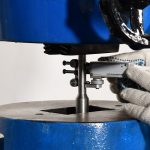
Step 3: Sample Extraction and Laboratory Testing
Representative samples from the damaged area are carefully sectioned for metallurgical testing. Techniques include:
- Microscopic Examination: Identifies crack morphology, corrosion pits, and microstructural changes.
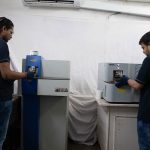
- Chemical Composition Analysis: Confirms alloy type and detects any contamination or material deviation.
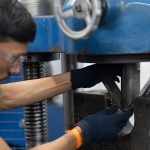
- Hardness and Microhardness Testing: Evaluates material properties and heat treatment condition.
- Fractography (SEM Analysis): Determines the fracture mode — brittle, ductile, or fatigue-induced.
Step 4: Environmental and Process Analysis
The failure environment (temperature, pH, chloride content, water chemistry, contaminants) is reviewed to determine its effect on corrosion and material degradation.
Step 5: Root Cause Determination
By correlating the visual evidence, metallurgical data, and operating history, the root cause of failure is established. This identifies whether the failure originated due to:
- Design inadequacy
- Improper operation or maintenance
- Material selection issue
- Manufacturing or welding defect
- External environmental influence
Step 6: Corrective and Preventive Recommendations
The final stage of failure investigation involves generating actionable recommendations to avoid recurrence. This may include:
- Material upgrade (e.g., switching to duplex stainless steel)
- Process parameter optimization
- Improved cleaning and inspection intervals
- Design modification to minimize stress points
Boilers Tube Failure Investigations: A Specialized Application
While heat exchangers and boilers share similar design principles, boiler tube failures present unique challenges. These tubes operate under high pressure and temperature, exposing them to oxidation, creep, and corrosion.
Boilers tube failure investigations typically involve:
- Identifying external vs. internal corrosion damage.
- Studying oxide scale thickness to estimate metal temperature exposure.
- Detecting creep voids and microstructural degradation through metallography.
- Determining rupture characteristics to differentiate between overheating and mechanical overstress.
Each boiler tube failure tells a story — about water quality, operational control, or metallurgical integrity. Proper root cause analysis not only helps restore the system but also improves safety and reliability standards across the plant.
Role of Metallurgical Failure Analysis in Inspection Programs
In modern industries, metallurgical failure analysis forms the backbone of reliability-based maintenance. Traditional heat exchanger inspection using NDT methods can reveal “where” damage exists, but not “why.”
By integrating metallurgical testing with inspection data, engineers can:
- Understand damage mechanisms at the microstructural level.
- Predict the remaining life of critical components.
- Select materials and welding consumables best suited for the process environment.
This integration of inspection + analysis transforms routine maintenance into data-driven decision-making, improving overall plant uptime.
Importance of Root Cause Analysis in Reliability and Safety
Root Cause Analysis (RCA) is not merely a failure response activity — it’s a continuous improvement tool. Through RCA, organizations can identify systemic weaknesses in design, operation, and maintenance practices.
For industries such as oil & gas, petrochemical, fertilizer, and power generation, RCA brings measurable benefits:
- Reduced unplanned shutdowns and energy losses.
- Enhanced asset integrity and life-cycle performance.
- Better compliance with safety and regulatory standards.
- Improved documentation and knowledge sharing across teams.
By applying RCA findings to design improvements, companies ensure that the same problem never occurs twice — a key principle in operational excellence.
Integration of Heat Exchanger Inspection and Failure Investigation
An effective inspection program doesn’t stop at reporting defects; it connects field data with laboratory analysis. For example:
- Ultrasonic inspection reveals wall thinning → lab confirms corrosion mechanism.
- Eddy current testing detects tube pitting → metallography identifies localized chloride attack.
- Thermal imaging shows hotspots → microstructure analysis confirms overheating and creep.
This integration allows engineers to not only repair the damaged components but also improve overall plant reliability through informed maintenance planning.
Case Example: Root Cause Analysis of Tube Leakage in a Shell and Tube Exchanger
A refinery experienced frequent tube leakage in a stainless steel shell-and-tube exchanger after only two years of operation.
Investigation Summary:
- NDT revealed localized thinning at tube inlet regions.
- Metallography showed pitting corrosion and chloride deposits.
- Chemical analysis confirmed high chloride content in cooling water.
- RCA identified inadequate material selection and poor water treatment control as the root cause.
Recommendations:
- Switch to duplex stainless steel tubes.
- Implement improved cooling water treatment.
- Increase inspection frequency using eddy current testing.
- This case highlighted how failure and root cause analysis can convert reactive maintenance into preventive reliability management.
How TCR Advanced Engineering Supports Failure and Root Cause Analysis
As a leading material testing and inspection company, TCR Advanced Engineering Pvt. Ltd. provides end-to-end services for heat exchanger inspection, boiler tube failure investigations, and comprehensive failure analysis.
TCR’s expertise covers:
- On-site inspection and NDT of exchangers, condensers, and boilers.
- Metallurgical and chemical testing of failed components.
- Detailed root cause analysis reports with corrective recommendations.
- Support for design review, material selection, and life assessment.
With decades of experience across refineries, petrochemical plants, and power sectors, TCR ensures that every investigation delivers actionable engineering insight — not just data.
Conclusion
Every failure, if analyzed correctly, offers a valuable lesson. Failure and Root Cause Analysis transforms those lessons into lasting solutions. In the case of heat exchangers and boilers, such investigations are not just about identifying damage — they are about improving design, ensuring safety, and maximizing equipment life.
By combining heat exchanger inspection, failure analysis, and boiler tube investigations with a structured root cause approach, industries can significantly reduce downtime, enhance reliability, and achieve sustainable operational performance.
When performed by experts like TCR Advanced Engineering, Failure and Root Cause Analysis becomes a proactive tool that protects assets, safeguards personnel, and drives continuous improvement across industrial operations.
FAQs
1. What is Failure and Root Cause Analysis in heat exchangers?
Failure and Root Cause Analysis identifies the exact reasons for heat exchanger damage by combining inspection data, metallurgical testing, and process evaluation to prevent recurrence.
2. Why is Failure Analysis important for industrial heat exchangers?
Failure Analysis helps detect underlying material, design, or operational issues early, reducing downtime, improving reliability, and extending the overall service life of heat exchangers.
3. What methods are used in a Failure Investigation?
A typical Failure Investigation includes visual examination, NDT inspection, metallurgical testing, and chemical analysis to determine the cause and mode of component failure.
4. How does Root Cause Analysis improve equipment reliability?
Root Cause Analysis pinpoints systemic problems causing failure, helping engineers optimize design, materials, and maintenance practices to enhance long-term equipment reliability and safety.
5. What are common causes of heat exchanger failure?
Common causes include corrosion, erosion, fouling, thermal fatigue, vibration, and poor material selection, often identified during comprehensive failure and root cause analysis.
6. What are Boilers Tube Failure Investigations?
Boilers Tube Failure Investigations determine the root cause of tube ruptures or leaks in high-pressure boilers through metallurgical, chemical, and thermal condition assessments.
7. How is Heat Exchanger Inspection connected to Failure Analysis?
Heat Exchanger Inspection detects physical damage or degradation, while Failure Analysis explains why it occurred — together ensuring accurate diagnosis and preventive maintenance planning.
8. Why should industries partner with experts for Failure and Root Cause Analysis?
Expert analysts like TCR Advanced Engineering offer advanced testing, in-depth evaluation, and actionable insights that help industries prevent costly failures and optimize operational efficiency.